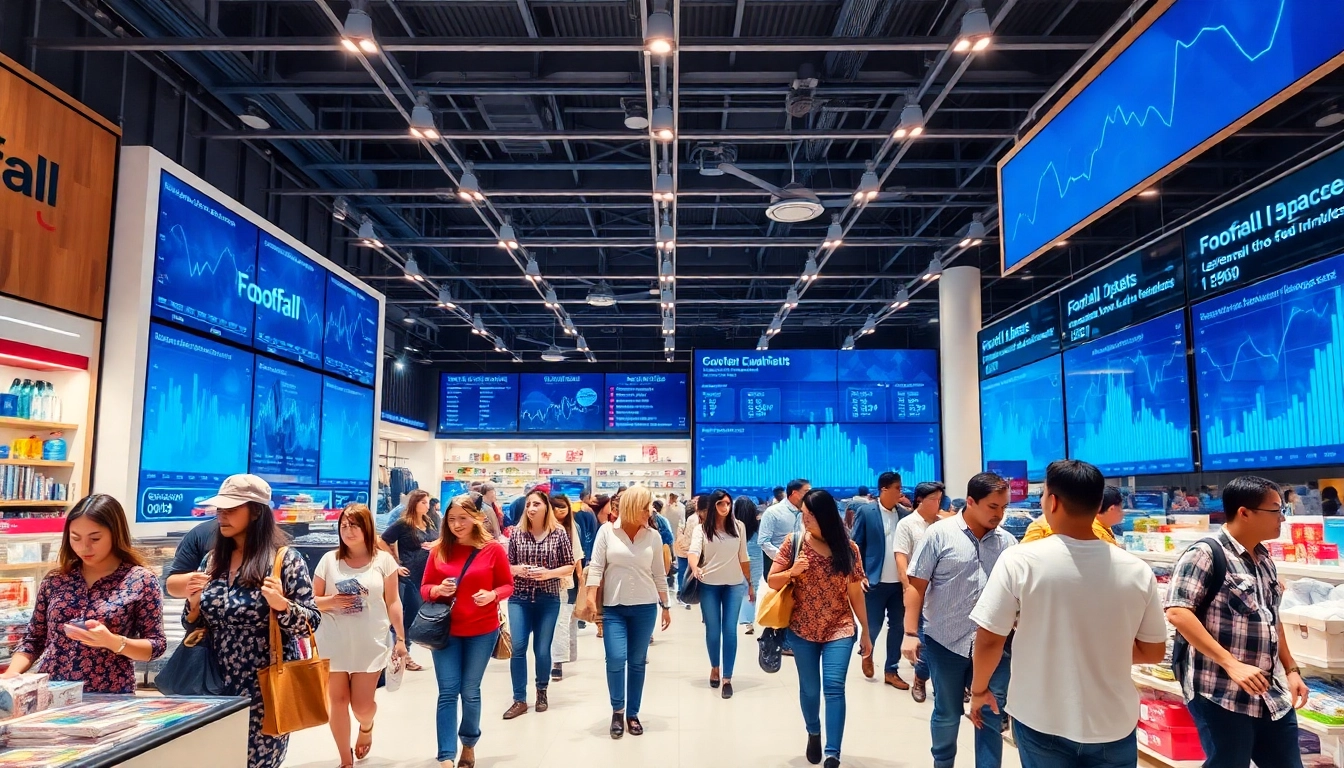
Introduction to Retail Footfall Analytics
Understanding customer behavior in physical retail spaces is critical for successful operations. Retail footfall analytics emerges as a key tool for businesses to gauge the effectiveness of their strategies, environments, and customer engagement. By leveraging retail footfall analytics, retailers can harness data to improve sales, enhance customer experiences, and drive operational efficiency.
Defining Retail Footfall Analytics
Retail footfall analytics refers to the systematic measurement and analysis of the number of consumers entering and moving through a retail space. This concept goes beyond merely counting how many people walk through the entrance; it delves into understanding intricate details such as customer flow, dwell time, and engagement patterns within the store. Retailers utilize diverse methodologies and technologies to collect this data, leading to profound insights about consumer behavior.
Importance of Measuring Footfall
Measuring footfall provides retailers with quantitative data that can inform a variety of business decisions. This data acts as a barometer for customer engagement and can significantly influence merchandising decisions, marketing strategies, staff allocation, and store layout. By knowing peak hours of customer visits, retailers can optimize staffing to enhance customer service and manage operational costs effectively.
Key Metrics in Footfall Analytics
Several critical metrics are associated with footfall analytics, which include:
- Total Footfall: The overall count of visitors during a specific period.
- Dwell Time: The average duration a customer spends within the store, providing insights into engagement levels.
- Conversion Rate: The percentage of visitors who make a purchase, which is crucial for evaluating sales performance.
- Peak Hours: Identifying times with the highest foot traffic aids in operational planning.
- Path Analysis: Understanding the movement patterns within the store to optimize layouts and displays.
Technology Behind Footfall Analytics
Types of Footfall Measurement Tools
The range of tools for measuring footfall is broad, with various technologies serving unique purposes. Common methods include:
- Infrared Sensors: These detect the heat emitted by human bodies to count people as they enter or exit.
- Video Analytics: Cameras equipped with facial recognition and motion detection can track footfall and provide in-depth analytics.
- Wi-Fi Tracking: By monitoring signal patterns from mobile devices, businesses can assess foot traffic and customer behavior.
- Mobile Apps and Beacons: These enable personalized marketing strategies based on users' locations within the store.
How Sensors Work in Retail Environments
Sensors serve as the backbone of footfall analytics, capturing raw data on customer movement. Infrared sensors, for example, create an invisible beam at the entrance that triggers when someone passes through, producing accurate counts. Video analytics, however, analyze images to count people while offering insights on their demographics. These technologies work seamlessly together to create a comprehensive picture of customer behavior in real time.
Integrating Technology for Effective Analysis
The integration of various measurement tools allows for a more nuanced understanding of footfall data. By combining data from different sources, retailers can obtain a more holistic view of their customer interactions. Well-developed analytical software can collate this data, visualize trends, and provide customizable reports, enabling retailers to make data-driven decisions effectively.
Analyzing Footfall Data
Techniques for Data Interpretation
Interpreting footfall data involves employing analytical techniques to derive insights. Retailers utilize statistical analysis, machine learning, and artificial intelligence to decode large datasets. For example, clustering techniques can reveal distinct customer segments based on behavior, while regression analysis helps predict future trends based on historical data.
Identifying Patterns and Trends
Recognizing patterns in footfall data is essential for proactive decision-making. Retailers should focus on identifying shifts in customer visitations, the impact of marketing campaigns, and seasonal trends. For instance, an increase in footfall might correlate with a specific promotional event, indicating how effective marketing tactics are in driving customer visits.
Visualizing Data for Actionable Insights
Effective visualization of footfall data allows retailers to grasp complex information at a glance. Utilizing dashboards with graphical representations such as heatmaps, bar charts, and line graphs can illuminate key metrics. This can lead to actionable insights; for example, a heatmap can highlight areas of high traffic, guiding product placement and promotional displays.
Applying Footfall Analytics in Retail Strategy
Optimizing Store Layout Based on Insights
The analysis of footfall data can lead to significant improvements in store design. By understanding customer movement and dwell times, retailers can rearrange products, optimize pathways through the store, and effectively place promotional items where customer engagement is highest. This strategic layout can drive conversions by facilitating a seamless shopping experience.
Enhancing Customer Journey Experience
With footfall analytics, retailers can enhance the overall customer journey. By deploying insights from foot traffic to personalize interactions, retailers can tailor experiences to fit consumer preferences. Real-time data might suggest the best times for sending personalized promotions, ensuring relevance and increasing chances of conversion.
Marketing Strategies Leveraging Footfall Data
Marketing strategies can become markedly more effective when informed by footfall analytics. For instance, understanding peak shopping times allows businesses to schedule marketing initiatives accordingly. Retailers can trigger location-based promotions through mobile platforms to attract more customers during identified peak hours, leading to increased engagement and sales.
Future Trends in Retail Footfall Analytics
Emerging Technologies Shaping Footfall Analytics
The future of footfall analytics is closely tied to technological advancements. Developments in artificial intelligence are leading to smarter, more predictive analytics that allow for deeper insights. As retailers deploy these advanced technologies, footfall analytics will become more precise and actionable, paving the way for enhanced customer experiences and operational efficiencies.
The Role of Artificial Intelligence
Artificial intelligence is set to revolutionize how retailers interpret footfall data. Through machine learning algorithms, retailers can analyze historical data patterns to forecast future footfall with high accuracy. AI can also automate the data processing pipeline, providing businesses with real-time insights instantly, facilitating rapid responses to changing market dynamics.
Preparing for a Data-Driven Retail Future
Retailers must adapt to a data-driven landscape, with footfall analytics at the forefront of their strategies. By investing in training staff to interpret and leverage data insights effectively, businesses can cultivate a culture that prioritizes data-driven decision-making. Additionally, retailers should remain agile and ready to pivot their strategies based on evolving customer behaviors.
Frequently Asked Questions
1. What tools measure footfall in retail?
Common tools for measuring footfall include infrared sensors, video analytics, and Wi-Fi tracking, each offering different insights into customer behavior.
2. How can footfall data aid retail marketing?
Footfall data can help identify peak shopping times and customer preferences, guiding personalized marketing initiatives and promotions for improved engagement.
3. What are key metrics in footfall analytics?
Important metrics include total footfall, dwell time, conversion rates, peak hours, and path analysis, each revealing different consumer behavior insights.
4. How often should footfall data be analyzed?
Regular analysis is recommended, ideally weekly or monthly, to detect trends, identify peak times, and adjust strategies based on customer behaviors.
5. Can footfall analytics improve store layout?
Yes, by analyzing foot traffic patterns, retailers can optimize store layouts, enhancing customer experiences and increasing conversion rates through strategic product placement.